Poster opened throughChapters I–IVOpen each reading only after you have finished it. The poster remembers where you are on this device.
Stations open as you read. On a phone, pinch to zoom or choose “Actual size.”
St. Petersburg, Missouri, in the year 184—.
$200 REWARD!
The Sum of Two Hundred Dollars will be paid for reliable intelligence of the Boy hereinafter described.
WANTED
Wanted — By the Widow Douglas — To Be Sivilized!
Supposed Murdered — But Lately Seen Alive!
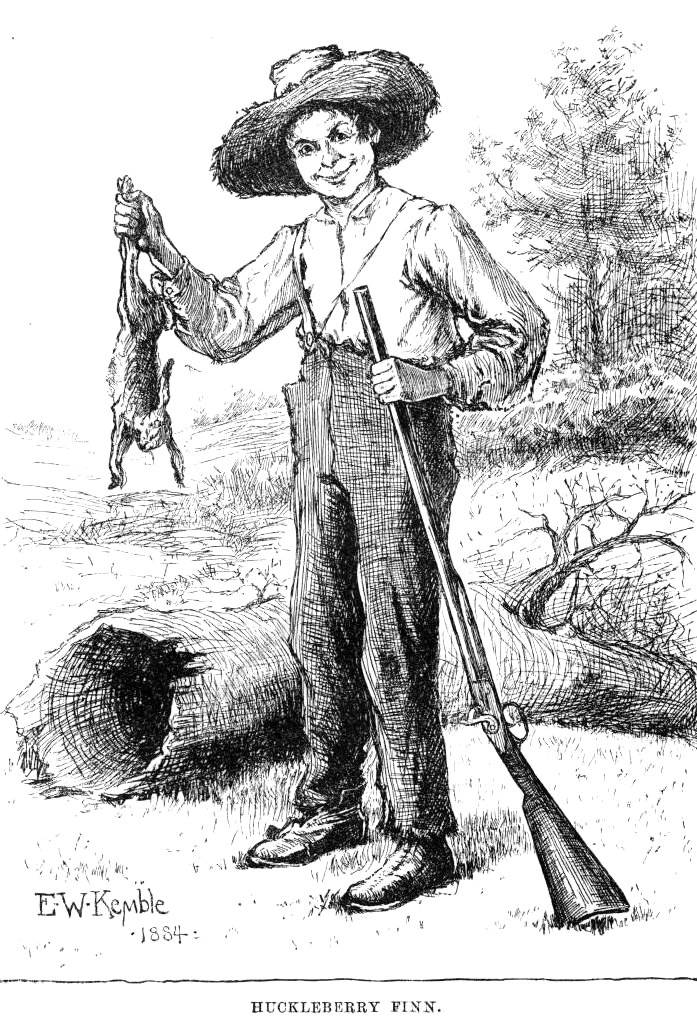
HUCKLEBERRY FINNTOM SAWYER’S COMRADE · AGED THIRTEEN OR FOURTEEN YEARS
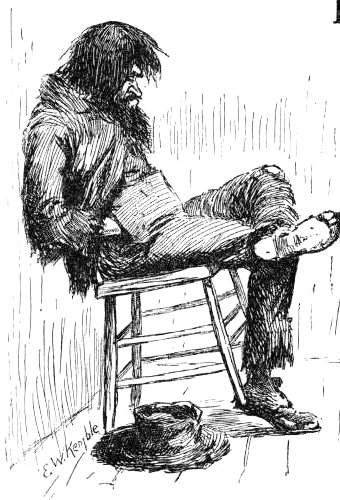
DESCRIPTION.— A BOY of thirteen or fourteen years; hair uncombed, feet bare, clothed in rags and an old slouch hat; smokes a pipe. Can read and write just a little, and say the multiplication table up to six times seven is thirty-five, and will not be sivilized.
Answers to HUCK; and, when it suits him, to SARAH MARY WILLIAMS and GEORGE PETERS, GEORGE JACKSON, ADOLPHUS, and even TOM SAWYER. Has six thousand dollars in gold at interest with Judge Thatcher, and wants none of it.
Is not dangerous; but he will lie.
HUCKLEBERRY FINN · E. W. KEMBLE, 1884
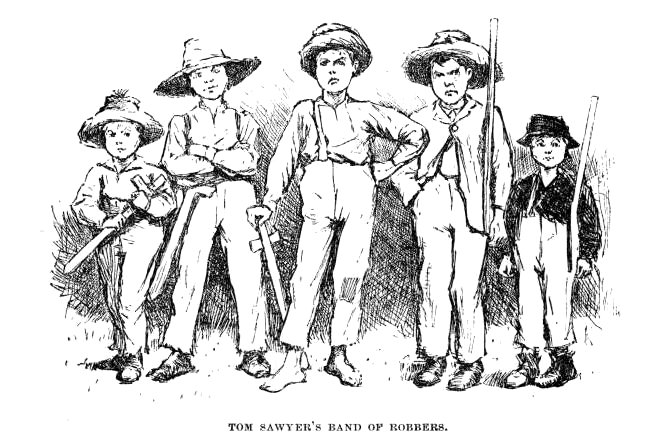
WAS LAST SEEN climbing out of the Widow Douglas’s window by night, to join TOM SAWYER’S GANG of robbers in a cave on the hill; lately much troubled by a boot-track in the snow with a cross in the heel.
WAS LAST SEEN at his father’s cabin upon the Illinois shore, three mile above town, which was found broke open, an axe blooded, and a trail laid to the river; upon which signs the boy was given up for MURDERED, and cannon fired over the water for his corpse.
☞ Since which time credible persons report him ALIVE, hid upon JACKSON’S ISLAND in company with JIM, of Miss Watson’s household.
☞ Since which time credible persons report him ALIVE and abroad upon the Mississippi on a RAFT, in company with JIM, of Miss Watson’s household, a man of great heart who seeks his liberty; and latterly with two notorious FRAUDS styling themselves the DUKE OF BRIDGEWATER and the LATE DAUPHIN OF FRANCE.
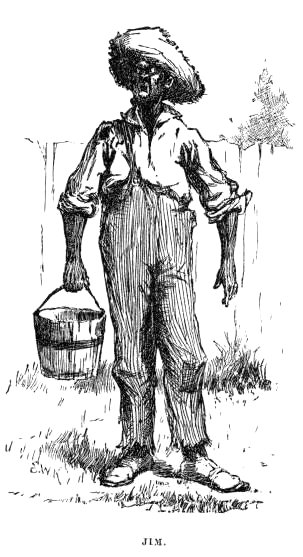
OF MISS WATSON’S JIM.— Of good stature and steady disposition; wears a five-center piece round his neck on a string, which he says is a charm the devil gave him, and is thought a great deal of by the other servants on account of it.
OF HIS COMPANION, JIM.— Of good stature and steady disposition; run off the very night of the supposed murder, rather than be sold down to Orleans for eight hundred dollars.
OF HIS COMPANION, JIM.— Of good stature and steady disposition; run off the night of the supposed murder rather than be sold down to Orleans for eight hundred dollars. The town has laid $300 on him for the murder, and $200 on old Finn. This paper holds him blameless of it: he is the better man of the two, and the truest friend the boy has got.
THE WIDOW DOUGLAS · JUDGE THATCHERSubscribers, St. Petersburg, Mo. — Communications may be left at the Post-Office.
A True Chart of the Flightdown the Mississippi River, by Raft
Laid down upon the modern river in FIFTEEN STATIONS, each illustrated from the engravings of Mr. E. W. Kemble, and opened only as the reader reaches them. The dotted red line is the course of the raft so far as read; the figures answer to the compartments right and left. Sealed compartments are not to be pried at.
1
St. Petersburg, Mo.Hannibal · Chapters I–VI
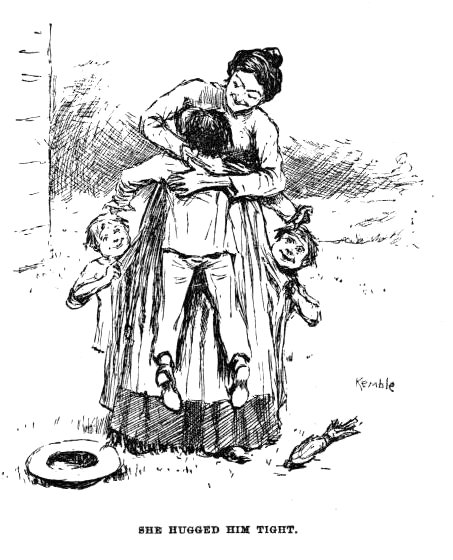
Where the trouble commenced. The WIDOW DOUGLAS undertakes to sivilize the boy; TOM SAWYER’S GANG swears its bloody oath in a cave; the boy’s six thousand dollars lie with Judge Thatcher — and a boot-track in the snow, with a cross in the heel, tells him who is back in town.
PAP FINN goes to law for the money, loses, and carries the boy off by force.
“The Widow Douglas she took me for her son, and allowed she would sivilize me.” — Ch. I
3
Jackson’s IslandChapters VIII–X
Two mile and a half below town. The ferry-boat goes by firing cannon over the water to raise his corpse. On the island Huck finds MISS WATSON’S JIM, run off rather than be sold down to Orleans.
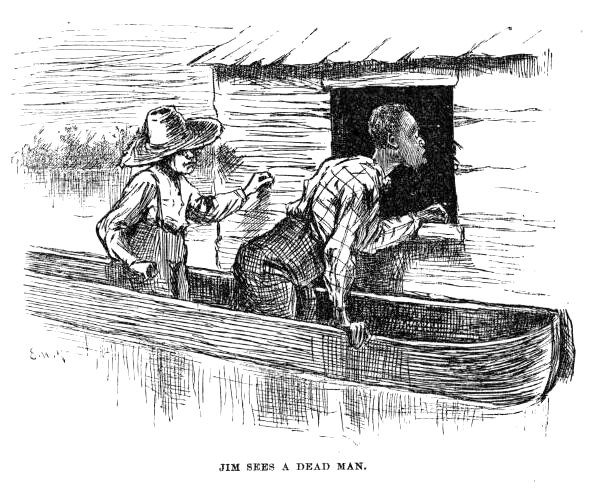
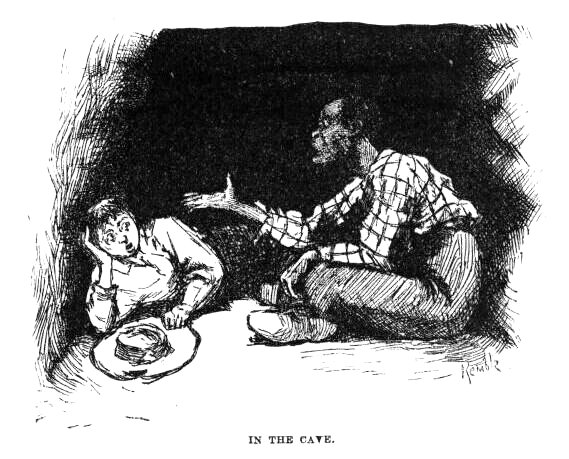
The two take to a cave on the ridge. On the June rise a frame house drifts by with a dead man in it, shot in the back; Jim covers the face and will not let Huck look.
“Well, I b’lieve you, Huck. I—I run off.” — Ch. VIII
5
St. Louis by NightChapter XII
Running nights and lying hid by day, the raft slides past the great city at two in the morning of the fifth night — TWENTY OR THIRTY THOUSAND souls, and not a sound out of them.
“The fifth night we passed St. Louis, and it was like the whole world lit up.” — Ch. XII
7
Cairo, Ill. — Passed in the FogChapters XV–XVI
The whole design: sell the raft at Cairo and take a steamboat up the Ohio into the FREE STATES. A fog parts canoe from raft; Huck plays Jim a mean trick and humbles himself for it. Daylight shows the clear Ohio water inshore — Cairo is behind them. Then the canoe is gone.
“So it was all up with Cairo.” — Ch. XVI
9
The King & the Duke Come AboardChapter XIX
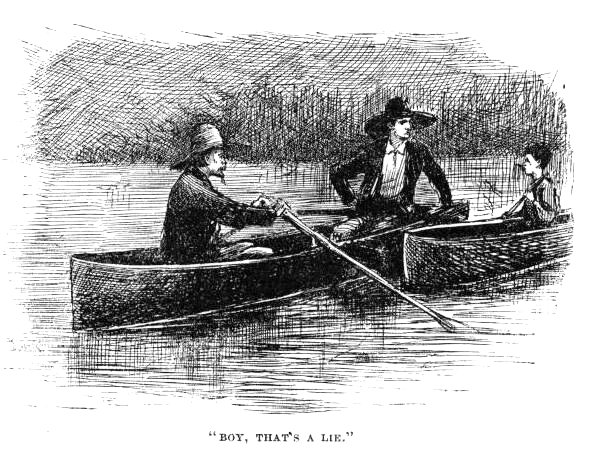
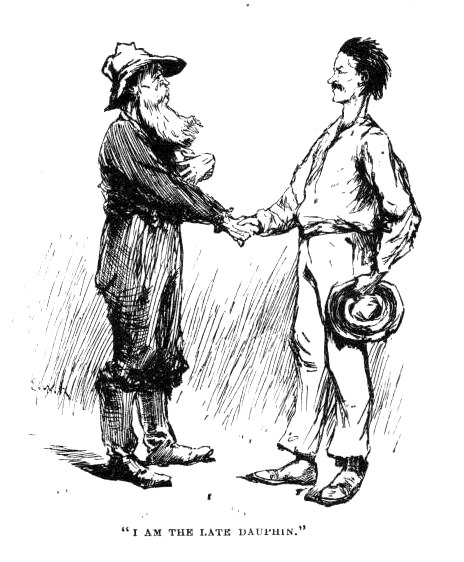
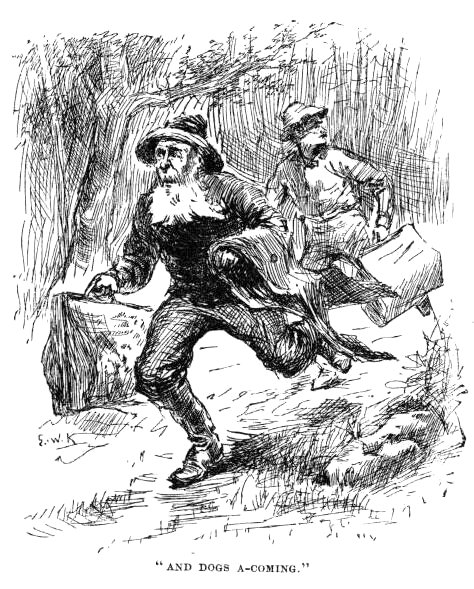
In the cypress woods below the feud country, two fugitives — one from a temperance revival, one from a tooth-wash that takes the enamel off — beg passage with the dogs behind them. By supper the one is the rightful DUKE OF BRIDGEWATER and the other the lost DAUPHIN OF FRANCE.
“Bilgewater, I am the late Dauphin!” — Ch. XIX
11
Bricksville, ArkansawOld Napoleon · Chapters XXI–XXIII
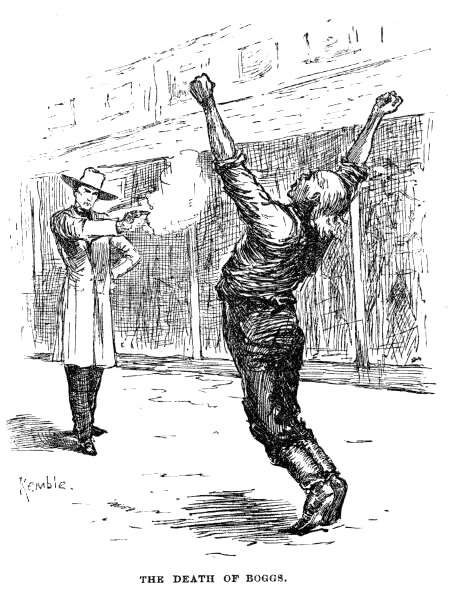
A caving-bank town of loafers and dogs. Drunken old BOGGS rides in to abuse COL. SHERBURN, who shoots him dead in the street.
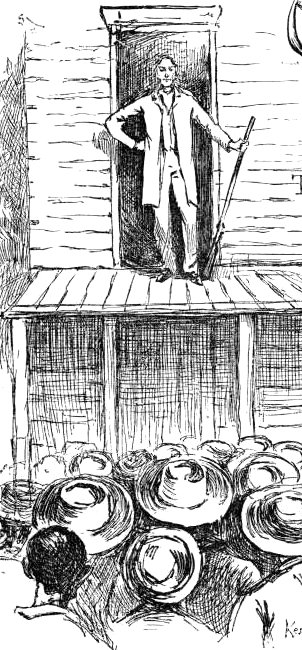
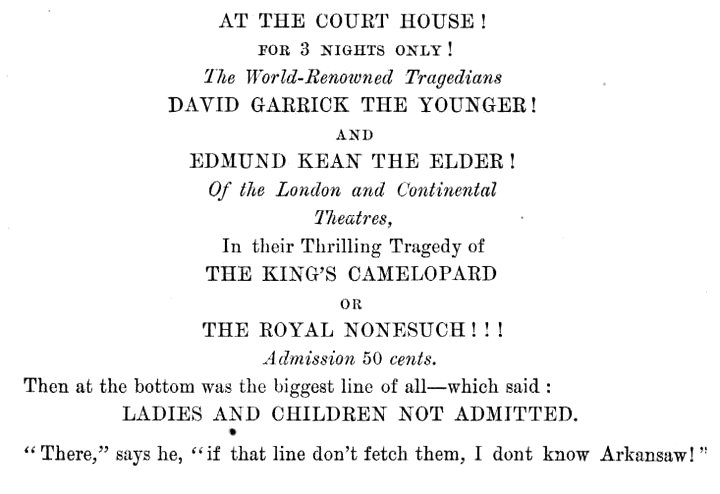
The lynch mob at Sherburn’s palings is shamed off with a speech. The Shakspearean Revival draws twelve; THE ROYAL NONESUCH takes $465 in three nights before the town gets its turn.
“Such a town as that has to be always moving back, and back, and back, because the river’s always gnawing at it.” — Ch. XXI
13
Pikesville — Jim Sold for Forty DollarsChapter XXXI
A shabby little village. The KING sells Jim to Silas Phelps for forty dollars and drinks it up. Huck writes to Miss Watson to give Jim up — studies the letter a minute, holding his breath — and tears it to pieces.
“All right, then, I’ll go to hell.” — Ch. XXXI
15
Out of Bondage — & the TerritoryChapters XLI – the Last
AUNT POLLY arrives eleven hundred mile down river to unmask the boys. Jim is free — freed in Miss Watson’s will two months gone, as Tom knew all along — with forty dollars for his trouble; Pap is the dead man in the floating house; and Huck, with sivilizing looming again, means to light out.
“I reckon I got to light out for the Territory ahead of the rest.” — Ch. the Last
Chart of the Mississippi River
from Quincy to Natchez, showing the States of Missouri, Illinois, Kentucky, Tennessee, Arkansas, Mississippi & Louisiana, with the Course of the Raft and the Stations of the Narrative. Compiled upon the modern river.
Course of the raft, so far as read · 7Station, numbered to the compartments · Washes mark the States; dotted lines are State lines.
Table of Distances from St. Petersburg
Place
Modern river miles
St. Louis
129
Cairo, mouth of the Ohio
309
Kentucky Bend (Grangerford landing)
388
Memphis
527
Napoleon, mouth of the Arkansas (Bricksville)
683
The Phelps place, Chicot County, Ark. (est.)
≈ 740
New Orleans — never reached
1,168
Distances will be entered as the raft makes them.
The river of the 1840s ran some 150 miles longer below Cairo than it does to-day, before the cut-offs; Twain’s “eleven hundred mile” is the old river, generously measured.
Persons of the Narrative, as they are met with
Huckleberry Finn
the boy — at every station.
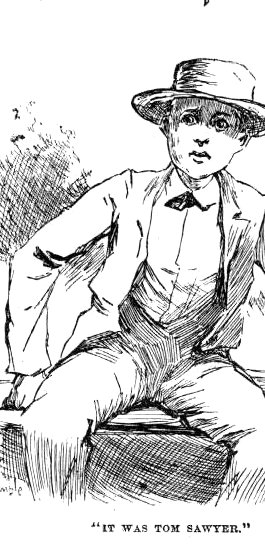
Tom Sawyer
his comrade; captain of the band of robbers — 1.
Jim
of Miss Watson’s household — 1.
The Widow Douglas & Miss Watson
his guardians — 1.
Judge Thatcher
keeper of the six thousand dollars — 1.
Pap Finn
the boy’s father — 1.
Mrs. Judith Loftus
a sharp-eyed lady at the bottom of the town — 4.
The Grangerfords & Shepherdsons
gentry, at feud — 8.
The King & the Duke
frauds — 9.
Col. Sherburn & Boggs
of Bricksville — 11.
Mary Jane, Susan & Joanna Wilks
the orphaned sisters — 12.
Silas & Sally Phelps
of the plantation — 13, 14.
Aunt Polly
Tom’s aunt, who arrives and spoils it — 15.
2
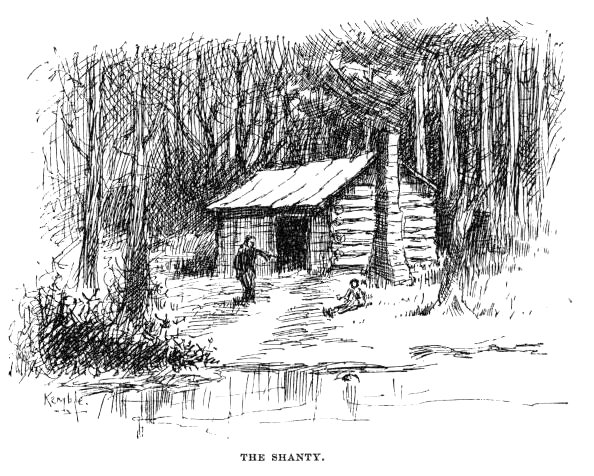
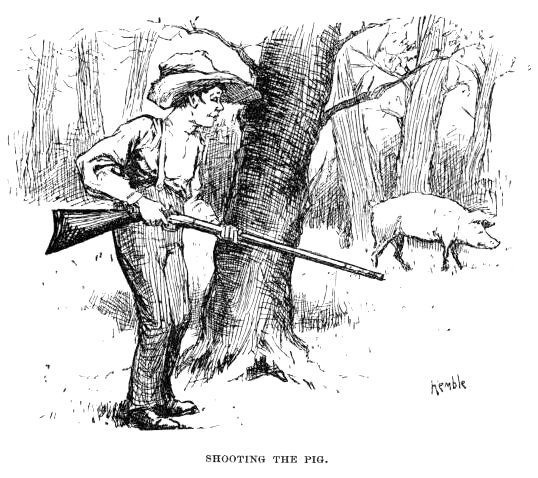
Pap’s Cabin, Illinois ShoreChapters VI–VII
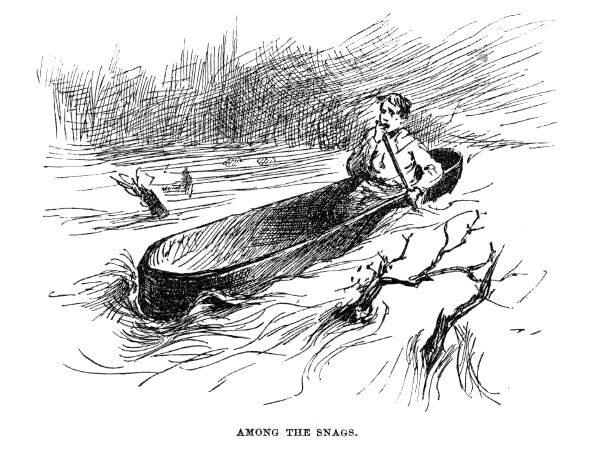
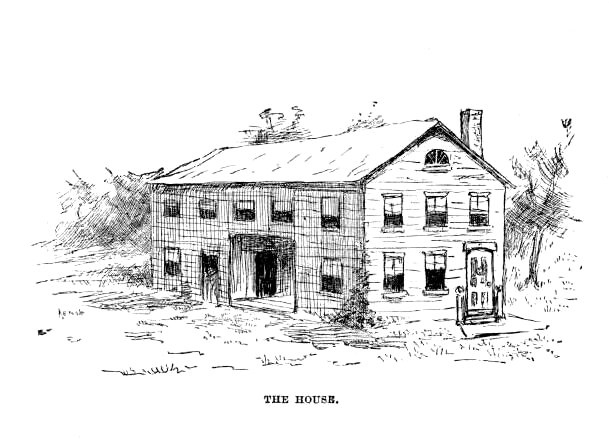
Three mile above town, in heavy timber. Locked in and licked, Huck saws out on the June rise; slaughters a wild pig, bloods the axe with his own hair, drags a sack of rocks to the river — MURDERED AND ROBBED by every sign — and drops downriver by canoe under the moon.
“I pulled out some of my hair, and blooded the axe good, and stuck it on the back side.” — Ch. VII
4
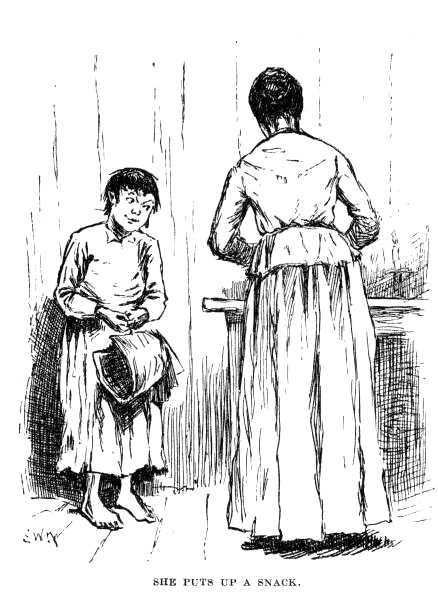
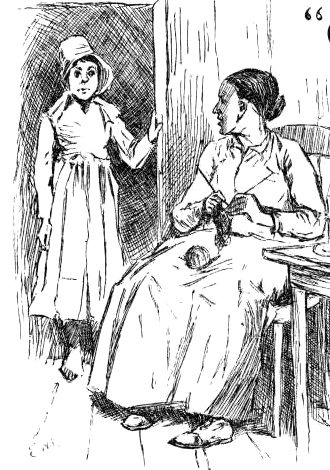
Mrs. Judith Loftus’sBottom of the Town · Chapter XI
In calico and sun-bonnet as “Sarah Mary Williams,” Huck learns the town has laid the murder on the runaway — $300 on Jim and $200 on old Finn — and that the lady’s husband crosses to the island to-night with a gun. There ain’t a minute to lose.
“So there’s a reward out for him—three hundred dollars.” — Ch. XI
6
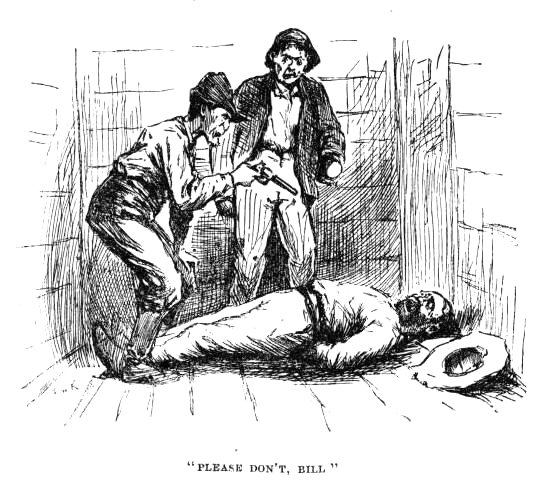
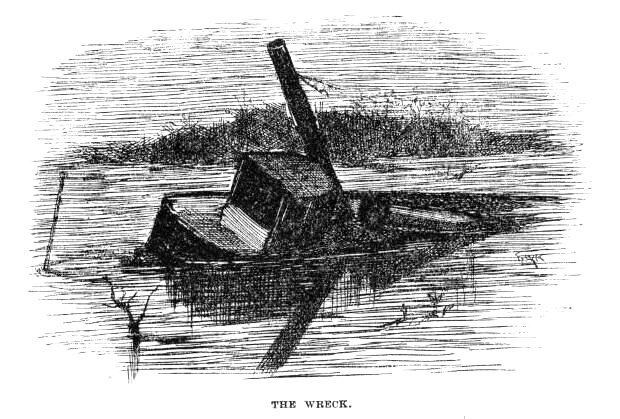
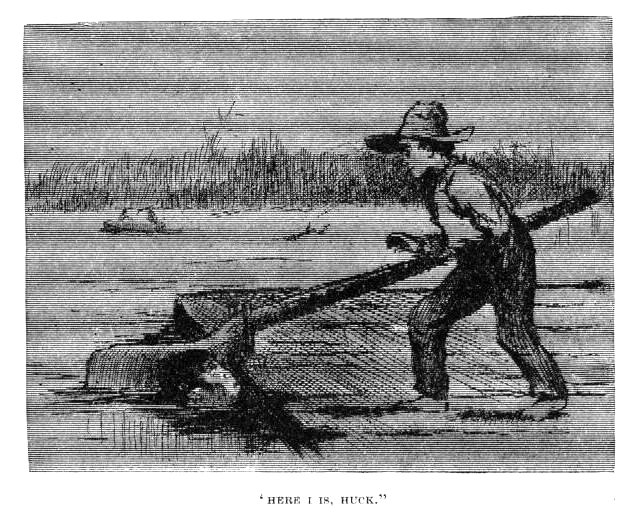
Wreck of the Walter ScottAmong the Bluffs · Chapters XII–XIII
In a midnight storm Huck boards a steamboat that has killed herself on a rock, and finds three ROBBERS aboard — two fixing to murder the third. Then word from Jim: the raft has broke loose.
He and Jim make off in the gang’s skiff, and Huck cons a ferryman out after a fictitious Miss Hooker. The wreck goes down, gang and all.
“It was a steamboat that had killed herself on a rock.” — Ch. XII
8
Kentucky Bend — Run Down in the NightChapter XVI
Grangerford Landing — the FeudKentucky Bend · Chapters XVI–XVIII
An up-bound steamboat comes smashing straight through the raft in the dark. Huck dives for the bottom to clear the wheel, and comes up alone.
He swims ashore to the GRANGERFORDS, gentlefolk thirty years at war with the SHEPHERDSONS over nobody remembers what. Miss Sophia elopes with Harney; Buck and his kin are shot down at the woodyard; Huck finds Jim and the mended raft hid in the swamp.
“It made me so sick I most fell out of the tree.” — Ch. XVIII
10
Pokeville Camp-MeetingChapter XX
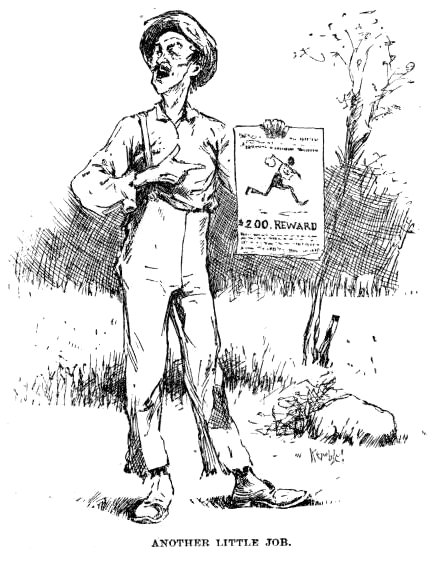
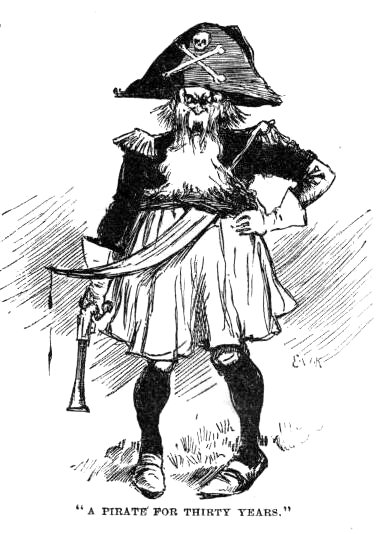
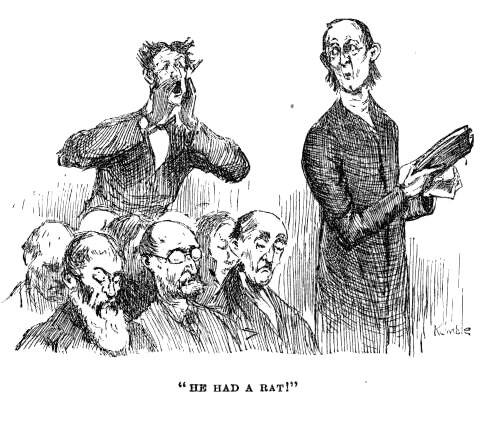
A one-horse town three mile down the bend. The KING, a reformed pirate of the Indian Ocean, weeps his way to the platform and passes the hat: $87.75 and a three-gallon jug. The DUKE, at the printing-office, strikes off a $200 runaway hand-bill describing Jim to a dot — so the raft may run by daylight.
“It all belongs to them dear people in Pokeville camp-meeting.” — Ch. XX
12
The Wilks TownAn Arkansaw Village · Chapters XXIV–XXIX
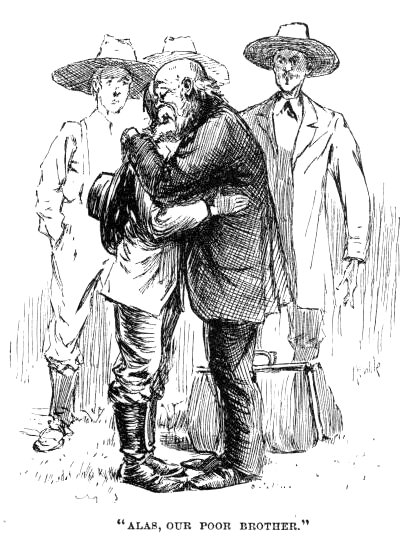
Hearing from a young fellow in a canoe of the late Peter Wilks, the King resolves to play the English parson HARVEY and the Duke the deaf-and-dumb WILLIAM, and the town takes them to its heart.
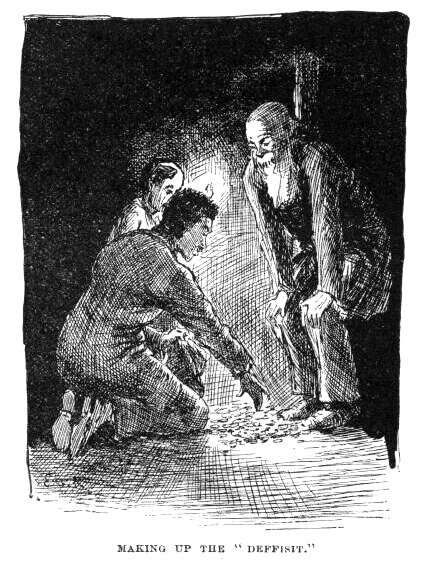
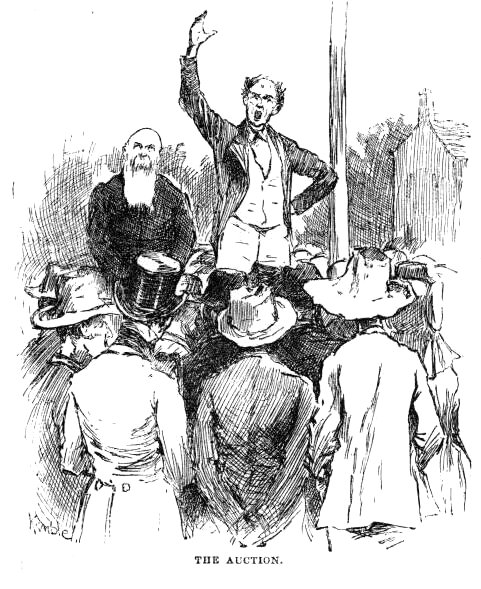
They lay hands on the $6,000 in gold. Huck steals it back and, cornered, hides it in the coffin; the King sells off the household at auction.
The true brothers land; by lightning in the graveyard the gold is found on the dead man’s breast — and Huck runs for the raft.
“It was enough to make a body ashamed of the human race.” — Ch. XXIV
14
The Phelps PlantationTwo Mile Below Pikesville · Chapters XXXII–XL
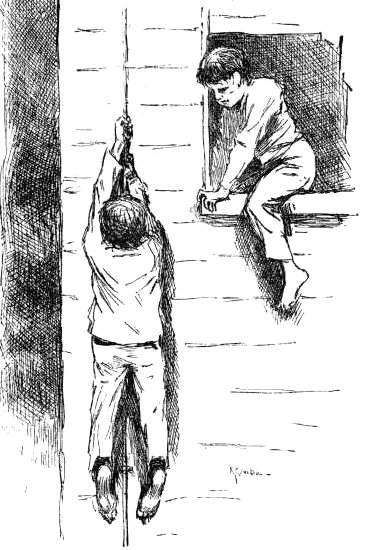
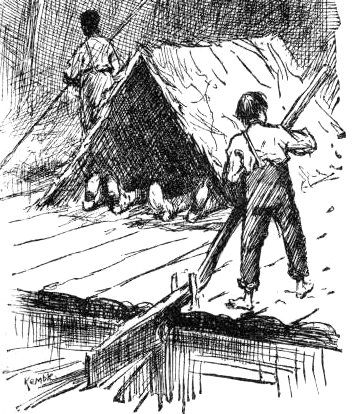
Taken for Tom Sawyer, Huck is joined by TOM himself (as “Sid”), who — to Huck’s astonishment — offers to help steal Jim; but only in style, by rope-ladders and case-knives and every difficulty in the books.
The EVASION grows: digging with case-knives, spoons and sheets gone missing, a witch-pie with a rope-ladder baked in it, a coat of arms, and a grindstone for Jim to inscribe.
Rats, spiders and anonymous letters bring out the farmers. Jim breaks out; Tom takes a bullet in the calf; Jim gives up his liberty to fetch the doctor.
“Who do you reckon it is?” — Aunt Sally, Ch. XXXII
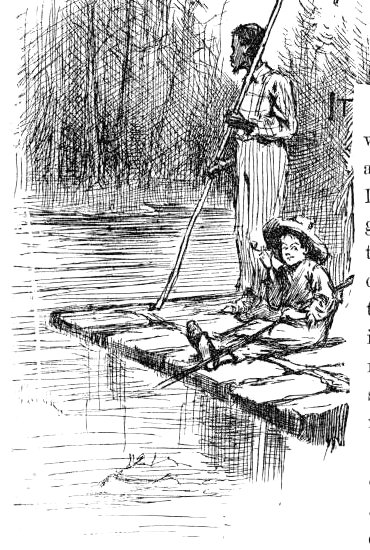
“It’s lovely to live on a raft. We had the sky up there, all speckled with stars.” — Ch. XIX “You feel mighty free and easy and comfortable on a raft.” — Ch. XVIII
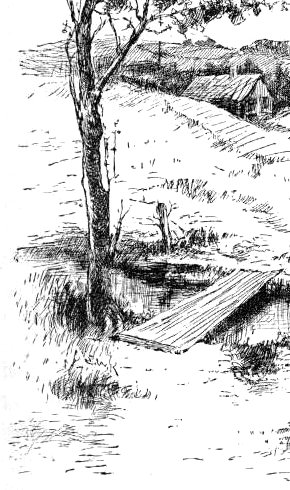
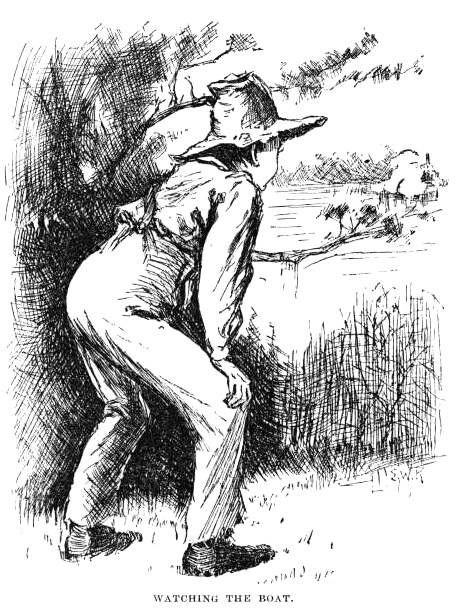
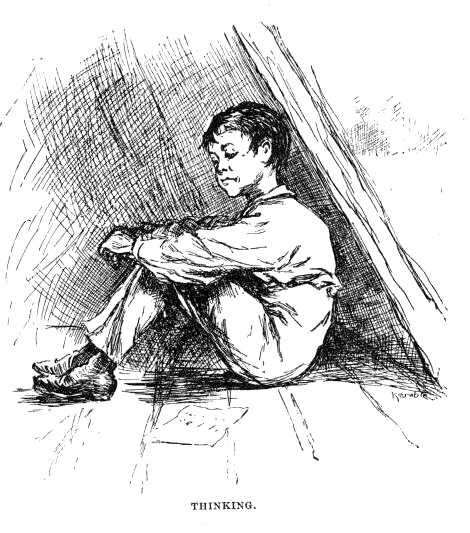
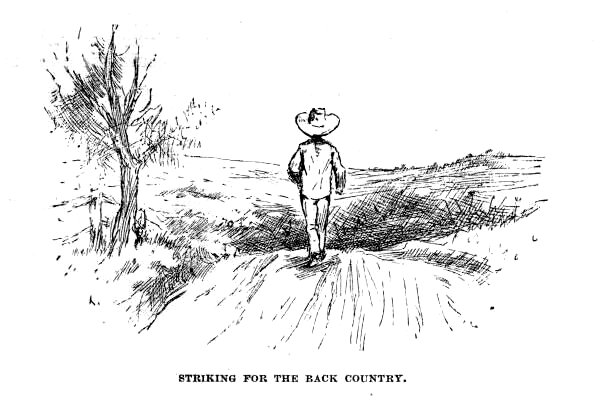
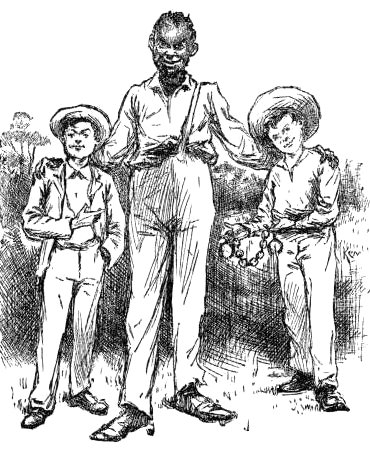
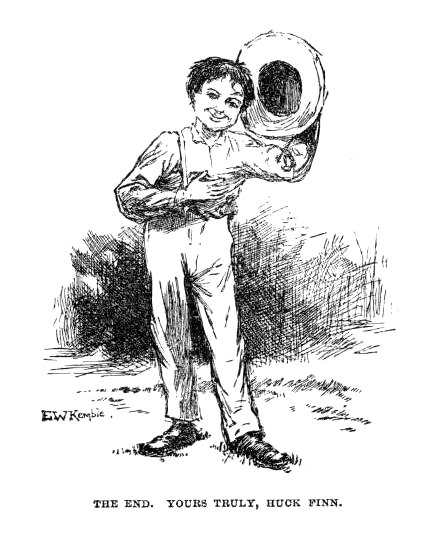
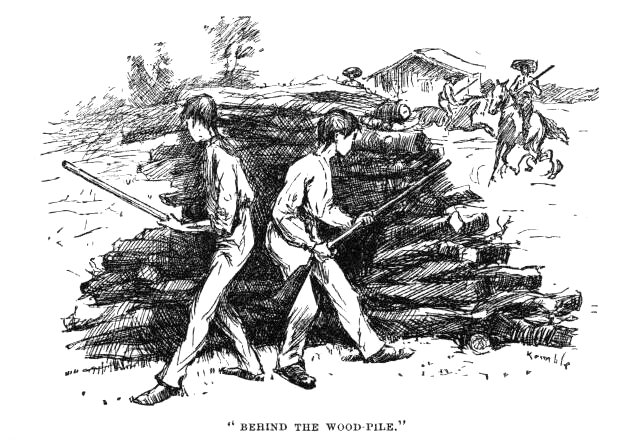
OF THE ENGRAVINGS. All the cuts are by E. W. Kemble (1861–1933), drawn for the first American edition of Adventures of Huckleberry Finn, Charles L. Webster & Company, New York, 1885, and now in the public domain. Kemble’s captions are printed beneath each.
OF THE CHART. Twain names no State for several of the stops. Where scholars place a fictional town on the real river, the marker follows them; where they disagree, it is a best estimate. The larger river towns are named for bearings only.
OF THE REWARDS. The $300 on Jim and $200 on Pap are the town’s figures (Ch. XI). The $200 on the boy is the printer’s own invention, after the Duke’s manner (Ch. XX).